
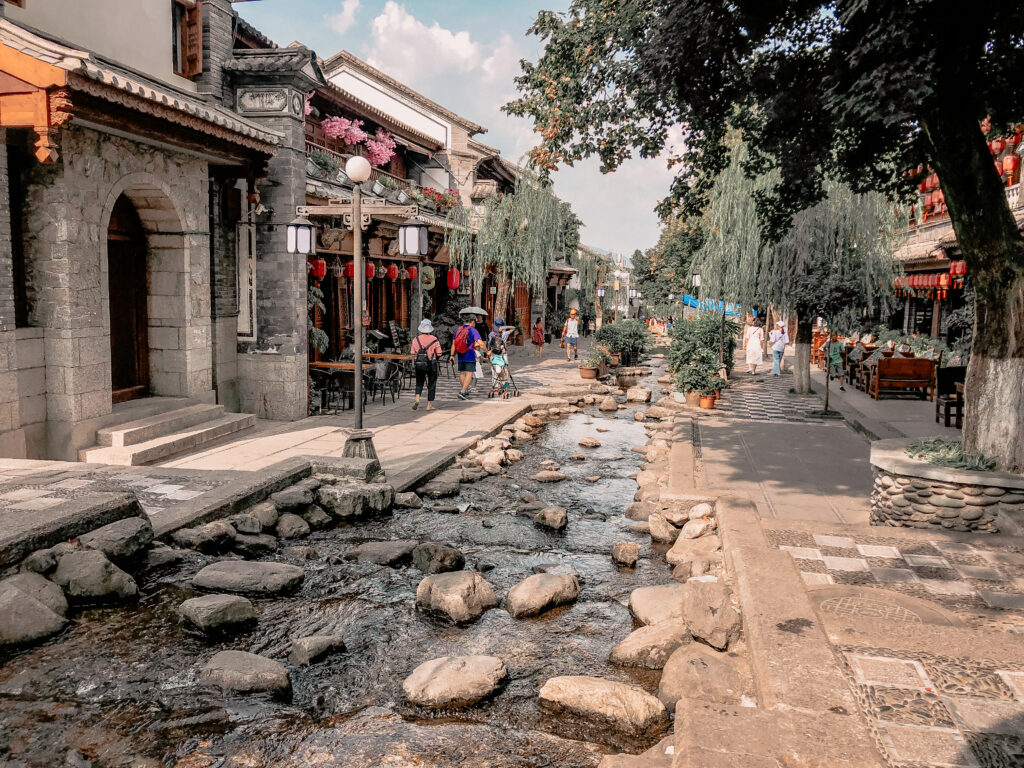
A complete Dali travel guide — Erhai Lake cycling, Dali Old Town, Xizhou and Shuanglang, Bai culture, and how to plan 2-4 days in this corner of Yunnan.
Dali moves at a noticeably gentler pace than its more famous neighbor, Lijiang — and that’s precisely its appeal. Set between the silver-grey Cangshan Mountains and the wide, ear-shaped Erhai Lake, Dali has been home to Bai culture for centuries and still feels, in places like Xizhou, like a town that tourism hasn’t fully caught up with. This guide covers the old town, the lake, the surrounding villages, and how to put together a few unhurried days here.
Why Dali Rewards Slowing Down
Dali Old Town dates back over 600 years and sits in a setting defined by two natural landmarks: the Cangshan Mountains rising behind it like a wall, and Erhai Lake — whose name literally means “ear-shaped sea” — stretching across roughly 250 square kilometers below. Most travelers treat Dali as a middle stop between Kunming and Lijiang on a broader Yunnan itinerary, but it holds up well as a destination in its own right, especially for travelers who want lakeside cafes and quiet villages rather than another packed old town.
What to Eat in Dali
– Xizhou baba — a round flatbread baked in clay ovens, sold on nearly every corner in Xizhou town; the savory version is stuffed with minced pork, scallions, and spices, while the sweet version uses brown sugar or rose jam.
– Wild mushroom hotpot — a Yunnan staple, especially good given the region’s reputation for foraged mushrooms.
– Dairy fan (rushan) — a signature Bai food, a thin, dried sheet of cow’s milk cheese, often grilled or fried.
– The Three-Course Tea ceremony — a Bai cultural tradition involving three distinct teas served in sequence, each representing a different stage of life; worth experiencing in Xizhou specifically.
The Old Town and Erhai Lake
Dali Old Town is the most popular base for first-time visitors, walkable and lively, especially in the evening around Foreigner Street. The Three Pagodas of Chongsheng Temple, just outside the old town, are the area’s most iconic historic landmark.
Erhai Lake is the region’s defining landscape, and the best way to experience it is by bike or scooter rather than car. A roughly 136-kilometer ecological cycling route circles much of the lake, making it one of the better cycling destinations in China. The Panxi S-Bend is a well-known photo stop where the road curves dramatically along the water. Each section of the lake has a different character: around Caicun and Xizhou, traditional houses and fields run right to the shoreline; toward Shuanglang on the lake’s western side, the area is more developed, with boutique hotels and cafes built directly over the water.
Cangshan Mountain, rising behind the town, can be reached via the Ximatan Cableway, which climbs to nearly 4,000 meters for sweeping views over the lake and surrounding valley. For something quieter, Jizhao Hermitage offers peaceful gardens and vegetarian meals partway up the mountain.
Xizhou: The More Authentic Alternative
About 18 kilometers north of Dali Old Town, Xizhou is a well-preserved Bai settlement that feels noticeably more authentic and laid-back than Dali itself, which has become considerably more commercialized over the years. Walking its quiet streets and traditional courtyards offers a sense of what Dali might have felt like before tourism arrived in force. The Zhengyi Gate marks the town’s historic west entrance, leading to a 500-year-old banyan tree so large it takes several people to encircle its trunk.
Zhoucheng, near Xizhou, is known for traditional tie-dyeing — a hands-on workshop here is a popular half-day activity, often paired with a visit to Xizhou itself.
Shuanglang and Beyond
Shuanglang, on the lake’s eastern shore, has developed into Dali’s boutique-hotel-and-cafe district, popular for “sea-view” rooms and Instagram-friendly lakeside settings, including spots like Little Putuo Island and a “Sky Mirror” photo location.
Shaxi Ancient Town, roughly halfway between Dali and Lijiang, is one of the best-preserved towns along the old Tea Horse Road (the South Silk Road) and far less visited than either of its more famous neighbors — its Market Square has even been recognized on the World Monuments Watch list. Worth considering if you’re driving between the two cities and want an unhurried stop.
Suggested Itinerary
Day 1: Dali Old Town and the Three Pagodas, settling in and adjusting to the slower pace.
Day 2: Rent a bike or scooter and circle part of Erhai Lake, stopping at the Panxi S-Bend, with a detour into Xizhou for baba and a wander through its quieter streets.
Day 3: Zhoucheng for a tie-dye workshop, or the Ximatan Cableway up Cangshan Mountain for the high-elevation views.
Day 4 (if you have it): Shuanglang for a slower, cafe-focused day on the lake’s eastern shore, or push onward toward Shaxi if you’re continuing to Lijiang by road.
Practical Notes
Most travelers spend 2-4 days in Dali. Rental shops for bikes and electric scooters typically ask for a passport deposit; check the weather before renting, since rain makes the lakeside roads slippery. Dali Old Town suits first-time visitors who want convenience and evening atmosphere; villages like Longkan and Caicun offer quieter lakeside stays for those prioritizing peace over nightlife. Spring and autumn bring the best weather and fewer crowds, with rice fields around Xizhou particularly beautiful during those seasons.
Building a Yunnan route through Dali, Lijiang, and Shangri-La? Get in touch and we’ll help you plan the pacing between them.
Leave a Reply