
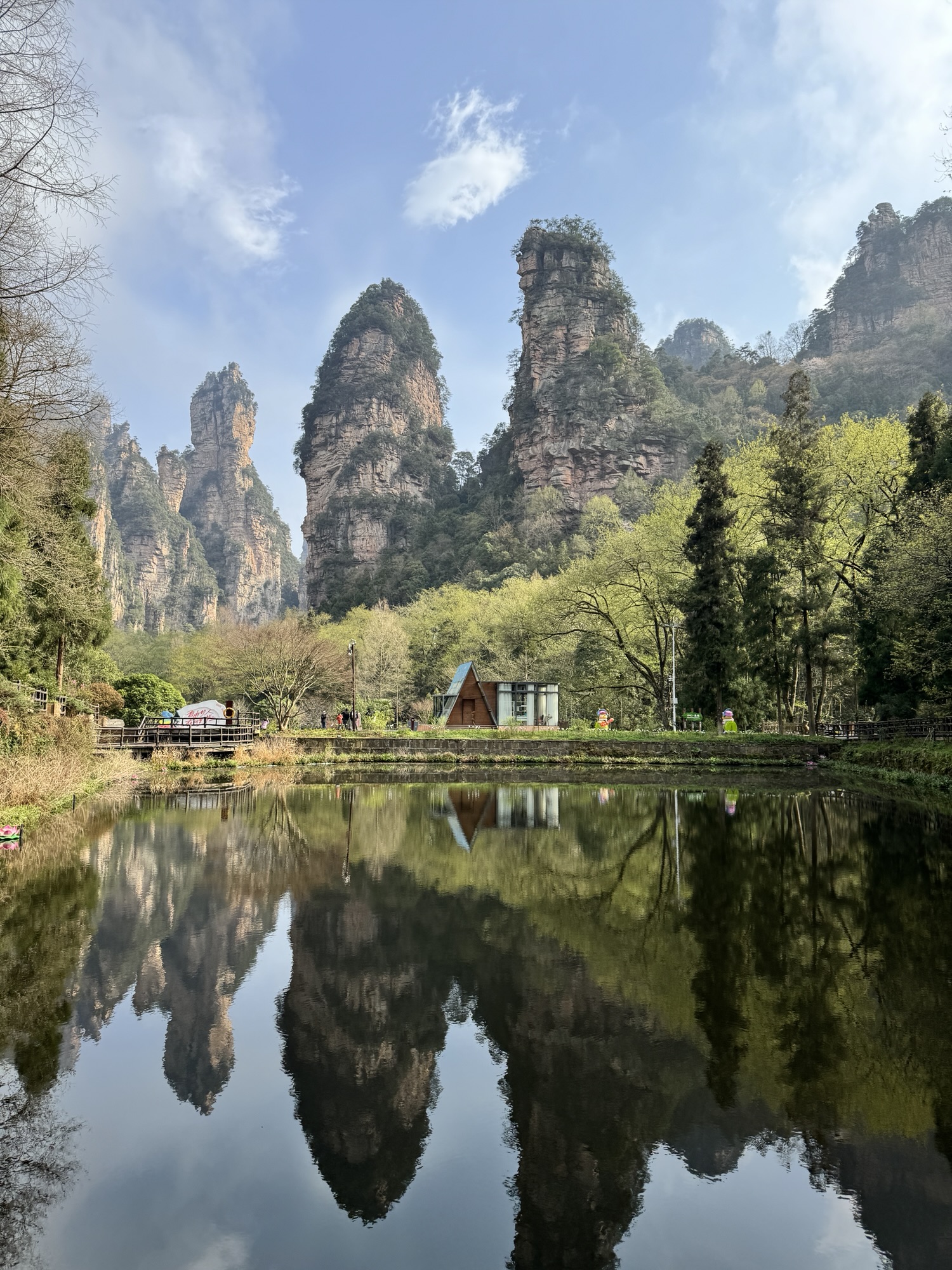
A complete Zhangjiajie travel guide — the Avatar Mountains, Tianmen Mountain, the Grand Canyon Glass Bridge, and how to plan 3-5 days in this Hunan UNESCO site.
Zhangjiajie’s quartz sandstone pillars rise out of the mist like something out of a fantasy film — because, in fact, they were the direct visual inspiration for the floating mountains in James Cameron’s Avatar. The “Southern Sky Column” formation here was even officially renamed “Avatar Hallelujah Mountain” in 2010 to commemorate it. This guide covers the national park, the glass bridge, Tianmen Mountain, and how to structure a realistic multi-day visit.
Why Zhangjiajie Needs More Than One Day
Zhangjiajie isn’t a single attraction — it’s a cluster of separate scenic areas, each requiring its own ticket and its own chunk of time. A one-day visit is, by most accounts, physically impossible if you want to see more than a fraction of what’s here. Realistically, budget 2-3 days for the core Wulingyuan/Zhangjiajie National Forest Park area alone, and closer to 5 days if you want to add Tianmen Mountain and the Grand Canyon Glass Bridge as well.
The Three Main Areas
Zhangjiajie National Forest Park (Wulingyuan). The core UNESCO World Heritage area and the reason most people come. Key zones within it include:
– Yuanjiajie — home to the “Avatar Hallelujah Mountain” viewpoint, reached via the Bailong Elevator, a glass-sided outdoor lift that climbs over 300 meters up the cliff face in about 90 seconds. From the top, the First Bridge Under Heaven (a natural rock bridge you can walk across, draped in red ribbons tied for good luck) and the main Avatar viewpoint are both accessible via a network of walking paths.
– Tianzi Mountain — known for sweeping panoramic views and, on the right morning, a genuine sea of clouds below the peaks.
– Huangshizhai — the largest viewing platform in the park’s quartz sandstone peak forest, reachable by a cable car (an extra ¥65 per person, about 10 minutes each way) to save time and energy.
– Golden Whip Stream — a gentler, riverside walk through emerald pools at the valley floor, a good lower-intensity alternative to the cliff viewpoints.
Tianmen Mountain. A separate park about 30 km from Wulingyuan, right next to Zhangjiajie city itself, requiring its own all-inclusive ticket (around ¥255). The signature experience is the cable car — at 7,455 meters from the city center to the summit, billed as the world’s longest single-span cable car line, taking about 28 minutes. At the top, a clifftop boardwalk with glass-floored sections wraps around the summit above a 1,400-meter drop, and the natural “Heaven’s Gate” arch cuts directly through the peak. The descent road, with 99 hairpin turns, is famous enough to have been featured on Top Gear, and is typically ridden down by bus rather than walked.
Zhangjiajie Grand Canyon Glass Bridge. A third, separate scenic area about 30 minutes from Wulingyuan, home to one of the world’s longest and highest glass-bottomed bridges — 430 meters long, suspended 300 meters above the canyon floor (entry around ¥138). It’s an iconic photo opportunity, but the experience on the bridge itself only takes about 30 minutes, and it’s reasonably skippable if you’re already doing Tianmen Mountain’s glass walkway and want to economize on time or money.
Suggested Itineraries
3 days (Wulingyuan only): Day one covers Yuanjiajie and the Avatar viewpoints via the Bailong Elevator. Day two covers Tianzi Mountain for the cloud-sea views and Huangshizhai for the panoramic peak-forest views. Day three is a slower day at Golden Whip Stream, or a repeat visit to whichever viewpoint had the best weather earlier in the trip.
5 days (adding Tianmen and the Glass Bridge): The same three days above, plus a dedicated day for Tianmen Mountain’s cable car and glass walkway, and a half-day for the Grand Canyon Glass Bridge if you still want both glass-floor experiences.
A Crucial Weather Note
The pillar formations only deliver their full visual impact on clear days — mist and rain are common here, and they can obscure the views that make the park worth visiting in the first place. Timing matters more here than at most attractions: April–June and September–October are generally the best windows for weather, and building in flexibility (an extra day, or flexibility to swap which viewpoint you visit on which day) significantly improves your odds of clear conditions.
Getting There
High-speed rail connects Zhangjiajie to Beijing and Shanghai (roughly ¥600-900, a long ride) and to Guangzhou (roughly ¥350-500) — cheaper than flying but a substantial journey either way. From Zhangjiajie West railway station, it’s about 30 minutes by taxi (¥40-60) or a ¥10 shuttle into the city or park area.
Practical Tips
Book accommodation and park tickets at least a week ahead during peak season, since both sell out quickly. Weather changes fast in the mountains — bring a light jacket even in summer. Photographers should prioritize Yuanjiajie at sunrise or sunset, Tianzi Mountain for the cloud sea, and the Bailong Elevator itself for dramatic cliffside shots from inside the lift.
Building Zhangjiajie into a Hunan or wider China itinerary with Guilin or Chengdu? Get in touch and we’ll help you work out the logistics.
Leave a Reply