
A complete Koyasan travel guide — temple stays (shukubo), the Okunoin cemetery, shojin ryori cuisine, and how to plan an overnight visit from Osaka.
Koyasan is a monastic mountain town founded in 816 CE by the Buddhist monk Kukai (Kobo Daishi), and it remains the headquarters of Shingon Buddhism today — a living religious community, not a historic site frozen for tourists. Staying overnight in one of its temple lodgings, joining monks for 6am prayers, and walking through a 200,000-tombstone cemetery lit by lanterns are experiences that genuinely don’t translate to photographs. This guide covers the temple stay experience, Okunoin, and how to plan your visit.
Why Koyasan Is Different From Other Japanese Heritage Sites
Mount Koya sits at roughly 800-900 meters elevation in the Kii Mountains of Wakayama Prefecture, chosen by Kukai partly because the mountain’s eight peaks resemble a lotus flower — an auspicious symbol in Buddhist cosmology. Today it’s a UNESCO World Heritage Site with over 100 temples, and the temperature noticeably drops compared to the lowlands below. Unlike Kumano’s pilgrimage trails nearby, which emphasize walking through nature along ancient paths, Koyasan is about stillness — staying on the mountain, soaking in its atmosphere, and experiencing a functioning Buddhist community rather than just touring its buildings.
Staying in a Temple (Shukubo)
According to the Koyasan Shukubo Association, 51 temples currently offer overnight lodging, with prices typically ranging ¥10,000-20,000 per person per night, including two meals. A typical schedule:
– Check-in: 3:00-5:00pm
– Dinner: around 5:30pm, featuring shojin ryori — Buddhist vegetarian cuisine that has influenced much of Japanese cooking more broadly –
Evening: free time to explore, with the Okunoin cemetery walk after dark being a particular highlight
– Morning prayers (otsutome): around 6:00am, joined by most guests even though it’s not mandatory
– Breakfast and checkout: most guests check out by 9:00-10:00am
A few practical notes: quiet hours apply after 9pm, shoes come off at the entrance, alcohol generally isn’t served (though some temples allow you to bring your own), and rooms typically don’t have locks. Wi-Fi availability varies by temple. Ekoin is a popular first-timer choice thanks to English-speaking staff and an accessible introduction to the experience.
Okunoin Cemetery
Okunoin is Koyasan’s spiritual heart — a 2-kilometer moss-covered stone path through Japan’s largest cemetery, lined with over 200,000 tombstones (including company memorials, samurai family plots, and, somewhat famously, a Terminator-themed memorial) beneath towering ancient cedar trees. The path leads to the mausoleum of Kobo Daishi, where followers believe he rests in eternal meditation rather than having died in the conventional sense.
Okunoin is free to enter and open 24 hours. Walking it at dusk or dawn, when mist settles between the gravestones and the 200,000 stone lanterns glow along the path, is genuinely one of Koyasan’s most memorable experiences — bring a flashlight if visiting after dark, and walking shoes regardless of timing. There are two entrance paths into the cemetery; entering via the Ichinohashi (First Bridge) near Houzen-in Temple Lodging takes you through the longer, more scenic route. The atmosphere here is contemplative rather than somber — pilgrims actively offer water and incense, and monks chant prayers as part of ongoing devotion, not historical reenactment. Speak softly and bow when crossing the bridge before the mausoleum area.
Danjo Garan
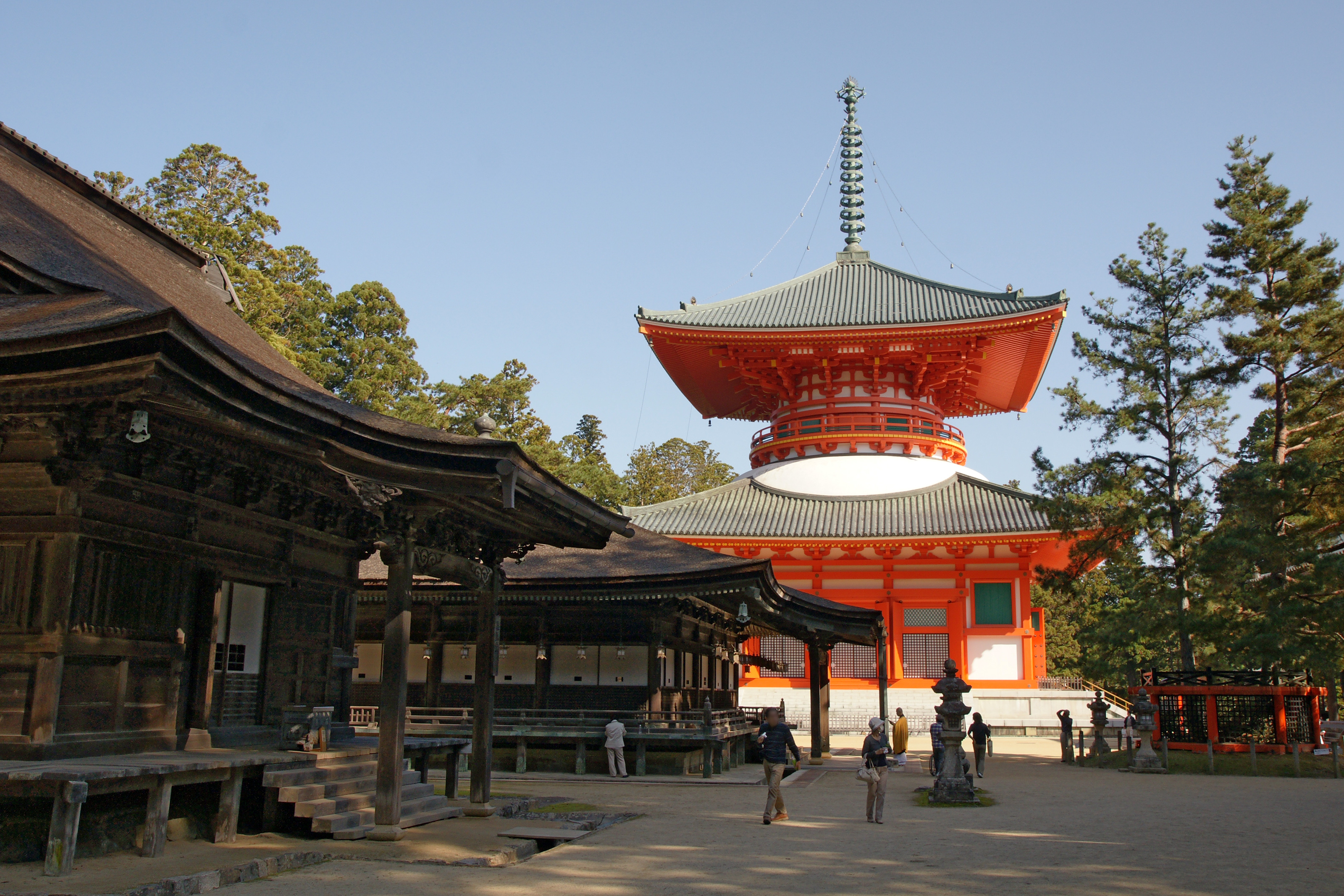
The central temple complex that Kukai originally established in the 9th century. Its landmark structure, the Konpon Daito, is a 48-meter vermillion pagoda representing the center of a mandala encompassing all of Japan within Shingon Buddhist cosmology.
Suggested Itinerary
Minimum: one overnight stay. This is genuinely the recommended minimum, not just a nice-to-have — it lets you experience morning prayers, walk Okunoin in different lighting (day, dusk, and after dark), and enjoy the evening quiet once day-trippers have left the mountain.
Day 1: Arrive by early afternoon, check into your temple lodging, explore Danjo Garan and the surrounding central town, walk Okunoin in the late afternoon and again after dark for the lantern-lit cemetery experience, then dinner (shojin ryori) back at your temple.
Day 2: Morning prayers around 6am, breakfast, a return walk through Okunoin in daylight to see details missed the night before, and checkout by mid-morning before heading back down the mountain.
Getting There
Osaka is the natural base for reaching Koyasan — the Nankai Line runs direct from Namba Station, with a cable car covering the final ascent up the mountain. From the cable car station at the top, local buses (numbers 41, 42, and 45) connect to the town center and Okunoin’s eastern entrance.
Best Time to Visit
Autumn brings Koyasan’s most celebrated seasonal scene: cedar and maple foliage turning red-gold above the moss-covered stone lanterns of Okunoin, widely considered one of Japan’s great autumn sights.
Combining Koyasan with Osaka and Kyoto as a complete Kansai trip? Get in touch and we’ll help you plan the logistics.
Leave a Reply